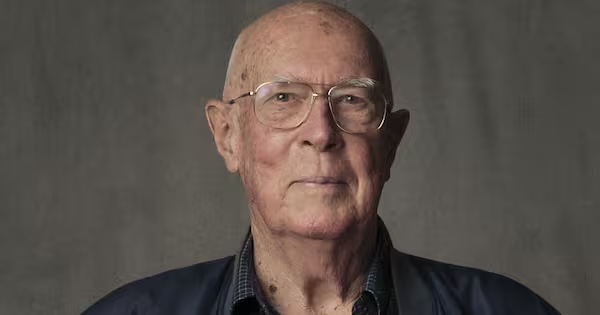
Les Mills Snr's death at 91 closes a founder story that ran through New Zealand sport, local politics and the global fitness industry. Mills, a four-time Olympian, Commonwealth Games gold medallist, former Auckland mayor and founder of a fitness empire, died on Monday. The Les Mills organisation published an official tribute describing Leslie Roy Mills MBE, CNZM as a founding father of fitness and recording his dates as 1 November 1934 to 29 June 2026.
The business story begins with a very local decision. Mills and his wife Colleen opened their first Auckland gym in 1968, paying NZ$5000 to take over a small health studio and beginning what was then a simple training operation. It was not yet a global brand. It was a family-run gym where basic strength and cardio training were offered to a small community, and where Phillip and Donna Mills helped around the business as children.
That origin matters because the modern Les Mills brand can now look inevitable from a distance. It was not. New Zealand in the late 1960s was not an obvious base for a future international group-fitness company. Mills had to translate the discipline of elite athletics into a public fitness culture at a time when gyms were still narrower, more specialised places. His success was not only that he opened a gym. It was that he helped normalise structured training as something ordinary people could join.
The next generation turned the family gym into an international system. Phillip Mills and Jackie Mills built the venture into Les Mills International, with programmes delivered in gyms across more than 100 countries. The group fitness studio grew after Phillip returned from the United States with ideas from the aerobics movement. That combination of Les Mills Snr's physical culture base and the next generation's programming model became the export engine.
Mills also had a civic chapter, serving as Auckland City mayor from 1990 to 1998 — a period linked to the Aotea Centre opening, the America's Cup village at the Viaduct, the Sky Tower rising and the contested Britomart transport project. For New Zealand business readers, the lesson is that export brands often start with a founder who understands the product physically and culturally before the business model scales. The first asset was trust: people believed he knew what disciplined physical improvement required.